The tiny household mystery
Why does the cable win when the toy box is full?
Chewing or ingesting non-food material is documented in cats. A survey can show that the behavior exists; it cannot diagnose why one individual cat is doing it.
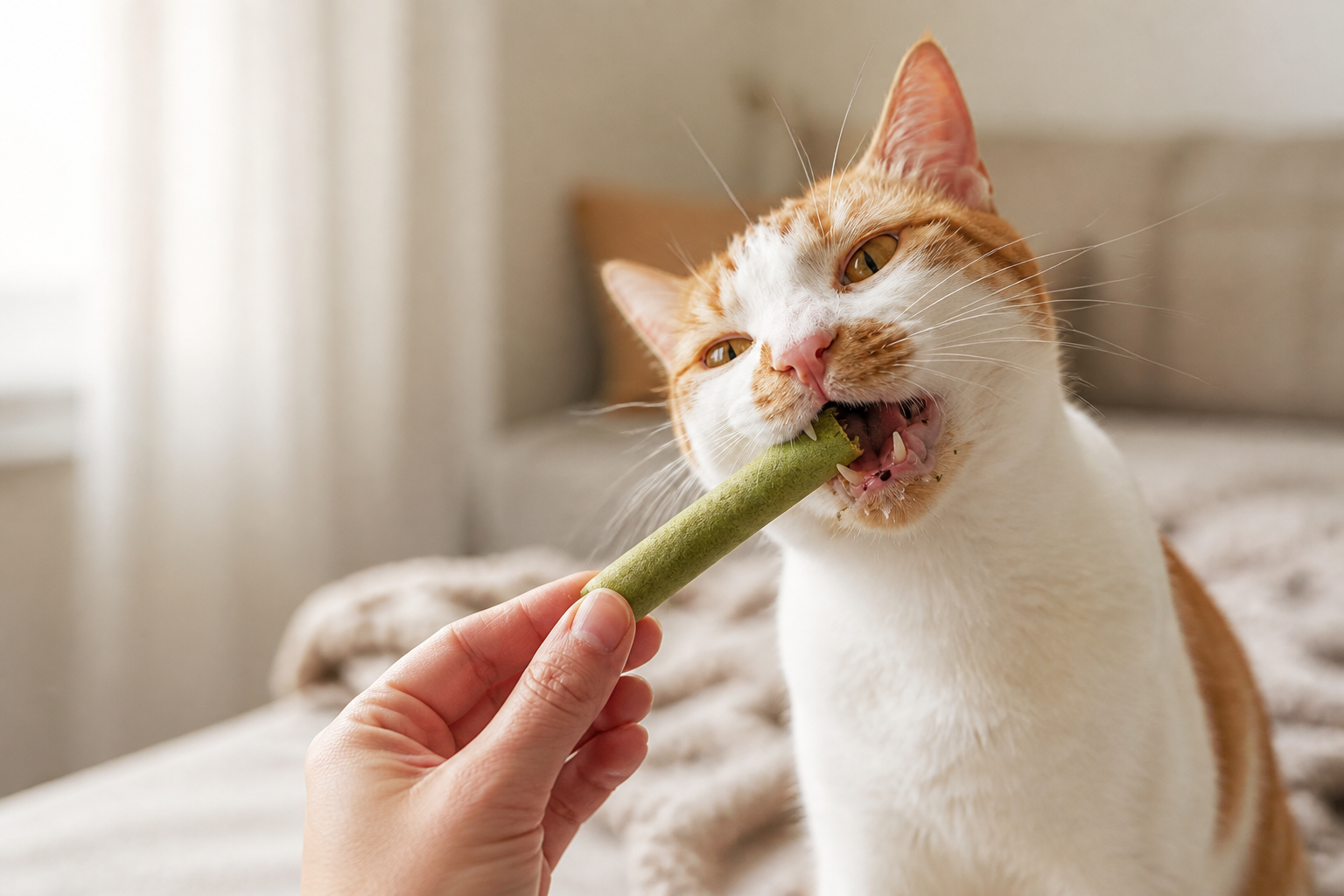
In a UK birth-cohort study, owners reported pica toward at least one material in 42.9% of cats at roughly six months, 32.0% at 12 months and 30.9% at 18 months. A separate questionnaire most often recorded shoelaces or threads, followed by plastic and fabric.
Sources: Kinsman et al., 2021 and Demontigny-Bédard et al., 2016. Owner-reported behavior; not a Maostix study.
The data establish the behavior—not the cause
The studies do not show that every chewer has pica, identify one universal motivation, or prove that a particular alternative will be chosen. They do make one practical distinction clear: household cords, plastic and fabric were not made to be eaten.
The honest product question
Will this cat choose an object made for cats?
That is a preference test, not a treatment claim. Observe the response honestly: love it, nibble it, or ignore it—and seek veterinary advice for persistent ingestion or health concerns.
Where Maostix fits
The current Maostix storefront presents six packaged, cat-directed sticks per pack and lists barley cat grass powder among the ingredients. That still does not establish acceptance, safety for every cat or a health outcome; final copy must match the signed label and feeding directions.
Editorial guardrail: the research cited above concerns feline behavior, not Maostix efficacy. This concept sells a voluntary preference test, not treatment of pica or a medical outcome.
Give the swap a real try
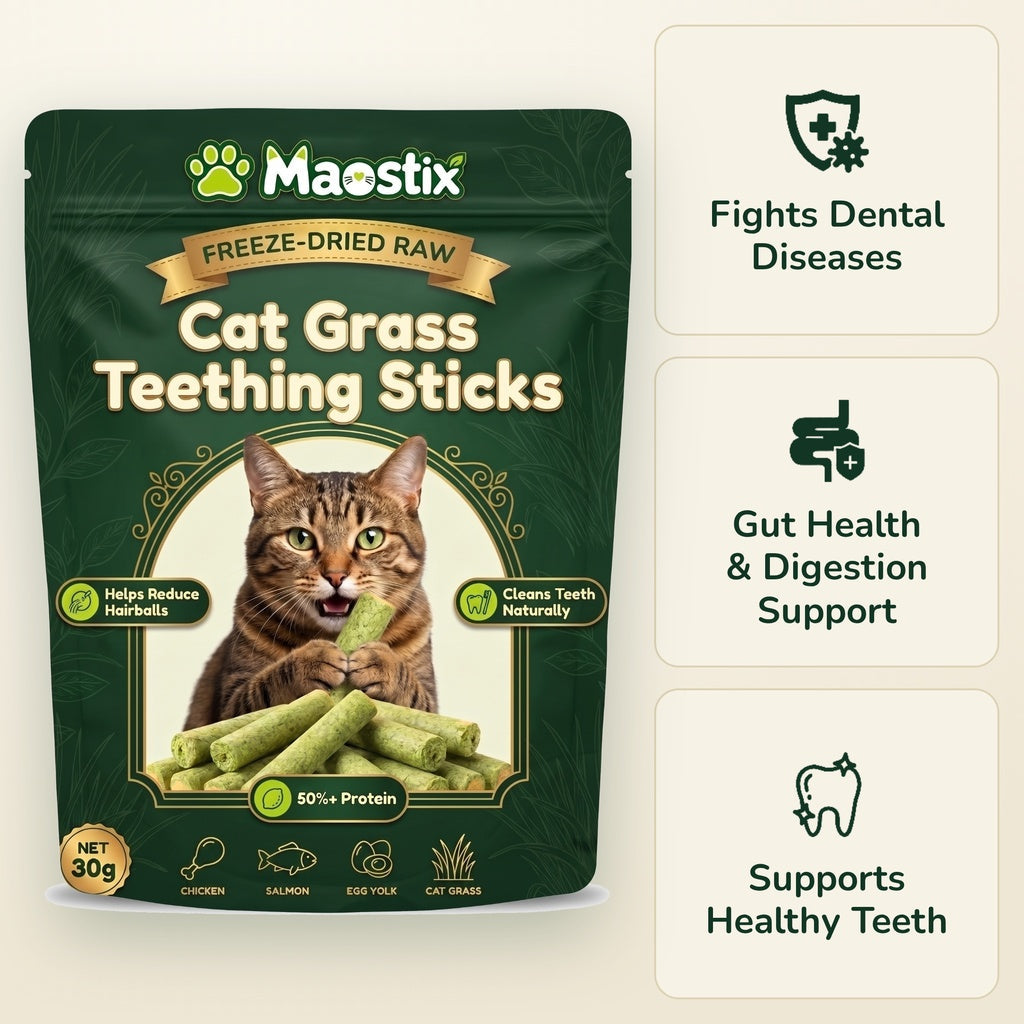
Current localized product and offer details are shown on the Maostix PDP.